—  ABOUT  â€” 

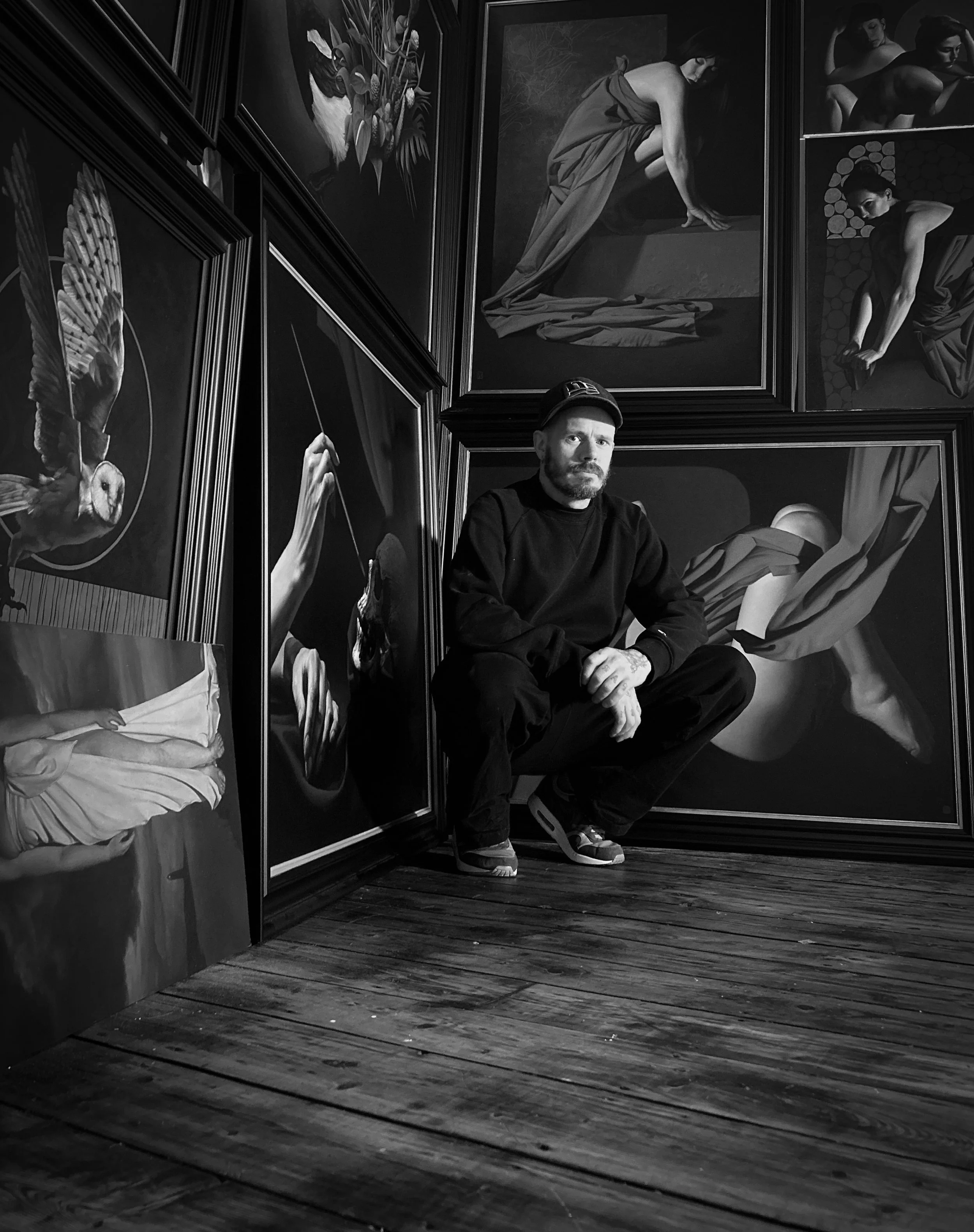
Photo of british figurative oil painter Dylan Lisle in his art studio with framed oil baroque style oil paintings

Dylan Lisle is British figurative painter. He studied at Gray’s School of Art in Aberdeen, graduating in 2000, and has since developed a practice rooted in classical techniques with contemporary sensibilities.

Lisle worked from studios in Aberdeen and Edinburgh for many years before relocating to Manchester in 2014. He is now based at 1853 Studios in Oldham working as both a painter and tattooist. 

His work has been exhibited extensively across Scotland and England, with solo exhibitions in London, Edinburgh, Aberdeen and Manchester as well as group shows in New York, London, Eton, Edinburgh, Glasgow and Manchester.
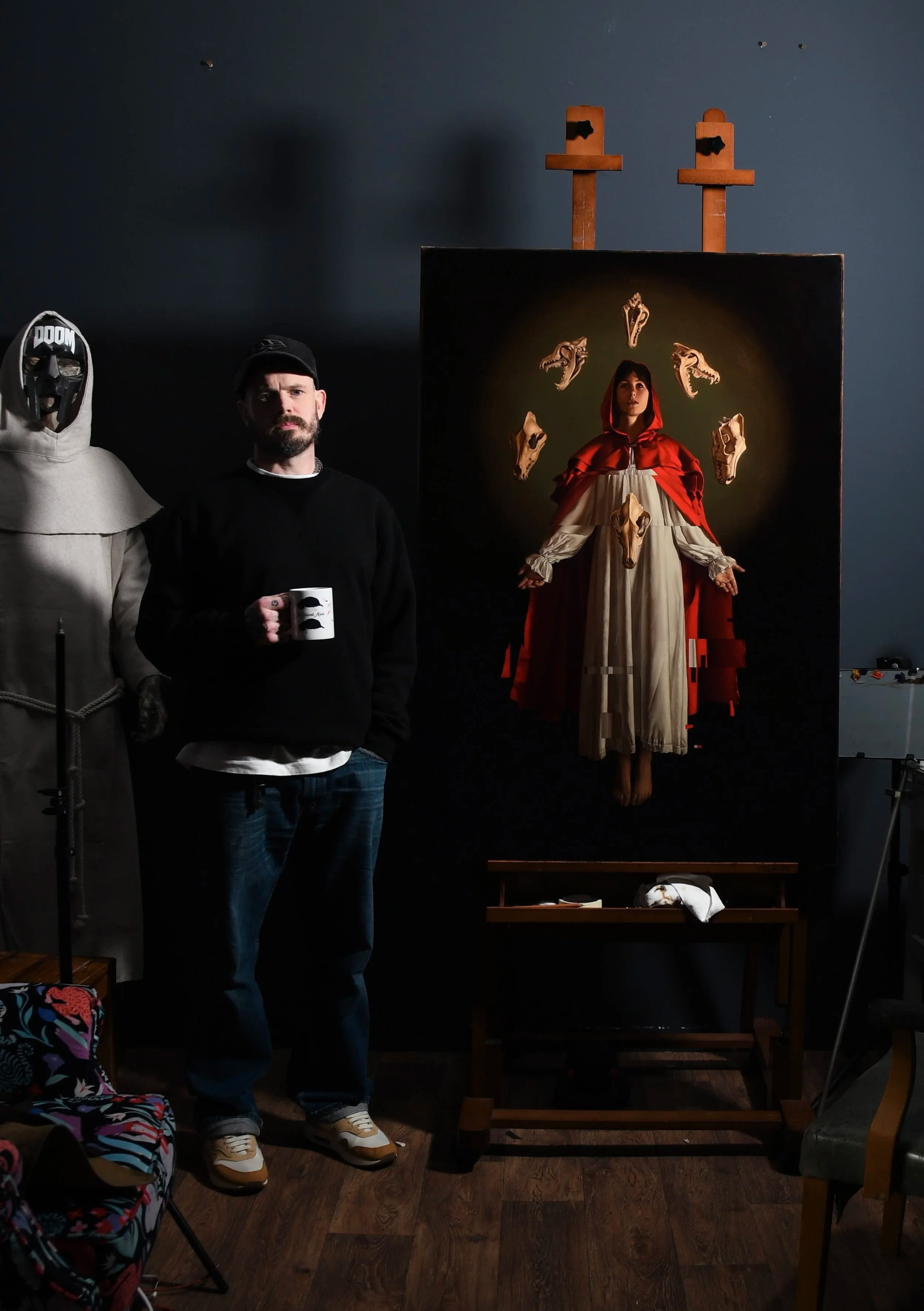
A man holding a mug stands next to a mannequin dressed as a monk and an artwork of a woman with a red cloak and animal skulls, with two small wooden sculptures on top.

Statement

My current body of work is a meditation on the historical societal functions of folklore, mythology and traditional aphorisms. It is an inquiry into the important mechanism of folk wisdom and oral tradition relative to the cultural and psychological paradigm shift of our technological and hyper-capitalist age. 

I am interested in the decline of moral instruction and "rules for life" that are carried and imparted by traditional narratives. These rudiments of social contract are given to us through our narrative culture from childhood; they play a significant role in the development of balanced, morally aware and emotionally sensitive adults. I believe this basic developmental stage is being replaced by the values disseminated by social media and the disconnect created through our internet-based interaction with the world. This considerable change in how we relate to one another, is increasingly manifested in our attitudes towards empathy and social responsibility.

Using traditional indirect painting methods and the dark aesthetic of the painters working in the baroque period, I create paintings that encourage the viewer to reconsider the messages carried by traditional narratives within the frame of the digital media age. I aim to encourage discourse on the impact of replacing the function of narrative heritage with social media and internet-based communication.