— ABOUT —
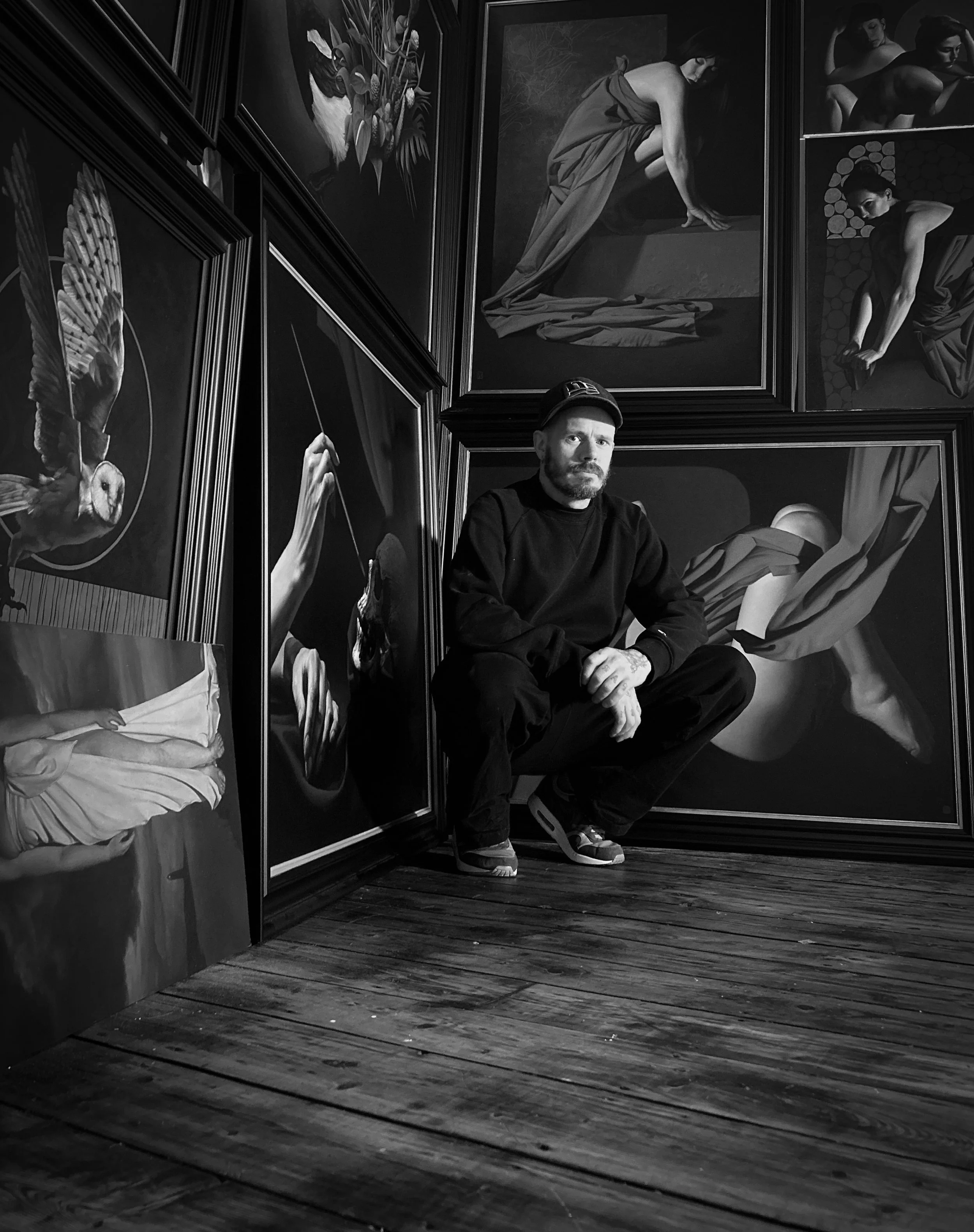
Dylan Lisle is a British artist who studied at Gray’s School of Art in Aberdeen, Scotland and has exhibited extensively in Britain. He has recently shown work at the Royal Society of Portrait Painters. He has also very recently won The De Laszlo Foundation Award at the Green and Stone Gallery in London and The Rosemary and Co. award in the New Emergence Prize. .
Lisle worked from studios in Aberdeen and Edinburgh for many years before relocating to Manchester in 2014. He is now based at 1853 Studios in Oldham working as both a painter and tattooist.
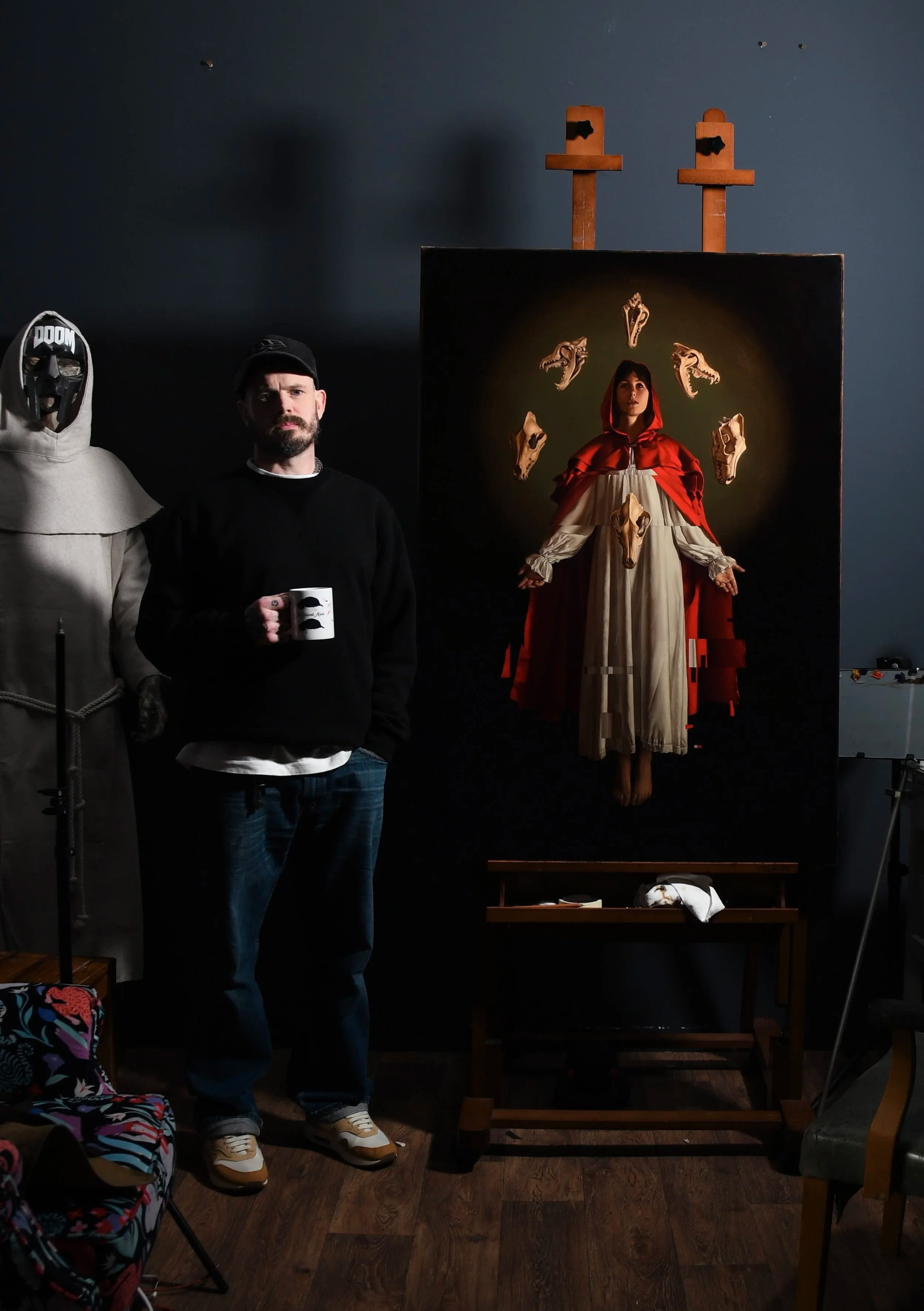
Lisle’s oil paintings of figures and animals use a language of symbolism and motifs to explore the shifting psychological relationships between people, cultures and value systems.
The technique of the work is integral to its message. The paintings employ layered combinations of indirect painting techniques borrowed from his studies of the old masters. The aesthetic of imprimatura, grisaille and glazing evoke a sense of tradition, history and craftsmanship at odds with the flashy immediacy of the world we now inhabit.
The work is aimed at viewers interested in culture as a system of meaning - particularly those considering how values, empathy, and social understanding are formed and transmitted. It asks whether traditional narrative structures that once carried communal knowledge are being transformed or displaced within digital culture, and what this shift might mean for contemporary experience.
I believe that artists currently occupy a unique and privileged position. At a time when technology increasingly mediates our experience of the world, art remains one of the few places where human emotion is not merely represented but embodied. What we take in from the world returns through our work as feeling, reflection and empathy. This is the enduring strength of art. It is a reminder of our shared humanity, and I believe that responsibility should remain at the forefront of our thinking whenever we add to our cultural history.